




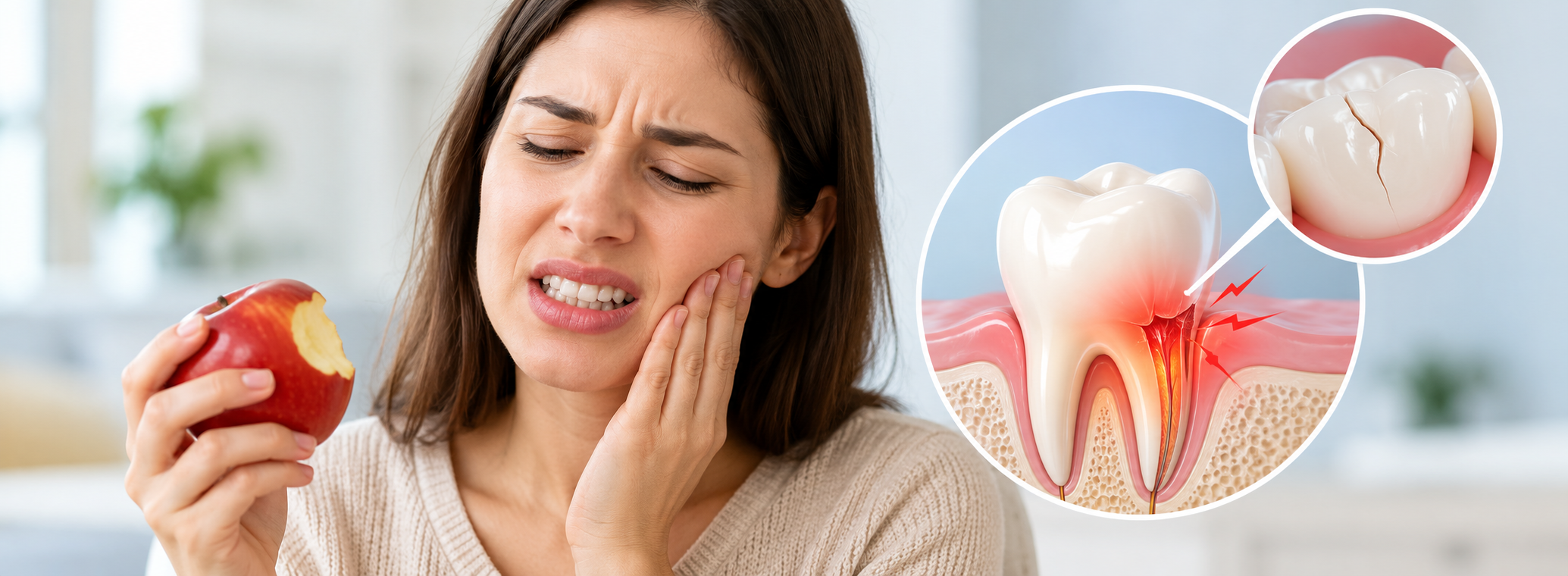
Tooth pain when biting down can result from a cracked tooth, cavity, damaged filling, uneven crown, or inflammation around the tooth’s root. Sharp pain when releasing pressure may suggest a crack, while persistent tenderness can indicate other dental problems. Recurring pain should be evaluated by a dentist.
Sometimes, the tooth looks completely normal and feels fine between meals. You may only notice discomfort when eating something crunchy or chewing on one side.
What Does Your Tooth Pain Feel Like?
The timing and location of tooth pain can help narrow down possible causes, although symptoms alone cannot confirm a diagnosis.
| What You Notice | Possible Explanation | What to Consider |
| Sharp pain when biting down | Cracked tooth, cavity, or loose filling | Arrange an examination if pain persists or returns |
| Pain when releasing your bite | Cracked tooth or fractured cusp | Avoid chewing on that tooth and seek dental evaluation |
| One tooth feels higher than the others | Uneven filling, crown, or inflammation around the root | Contact your dentist, especially after recent treatment |
| Several teeth feel sore in the morning | Teeth grinding or clenching | Check for jaw tightness or morning headaches |
| Tooth pain accompanied by swollen gums | Infection, periodontal inflammation, or trapped food | Seek prompt dental assessment |
| Several upper back teeth ache during a cold | Sinus-related pressure | Consider accompanying sinus symptoms; seek care if pain persists |
For upper tooth discomfort during congestion, see our guide to sinus-related tooth pain.
7 Common Reasons Your Tooth Hurts When Biting
1. A Cracked Tooth
A cracked tooth may cause sharp pain when chewing because the damaged portions can move slightly under pressure, irritating sensitive tissues inside the tooth.
Some people also experience temperature sensitivity, while others have no symptoms between meals.
According to the American Association of Endodontists, cracked teeth can cause intermittent chewing pain, especially when biting pressure is released.
2. A Cavity or Deep Tooth Decay
A cavity can make biting painful when decay weakens the tooth or reaches deeper, more sensitive layers.
You may also notice sensitivity to sweet foods or hot and cold drinks. However, some cavities cause little noticeable pain until the damage becomes more extensive.
Depending on the extent of decay, restorative dental treatments such as fillings or crowns may help repair the affected tooth.
3. A Loose or Damaged Dental Filling
A loose or fractured filling can expose sensitive tooth structure or leave part of the tooth unsupported, causing discomfort when chewing.
Common clues include a rough edge, food repeatedly catching near the filling, or pain concentrated around a previously treated tooth.
4. A Filling or Crown That Affects Your Bite
A filling or crown that sits slightly higher than the surrounding teeth can place excessive pressure on the treated tooth when you bite down.
You may notice that your teeth no longer meet comfortably or that one tooth makes contact before the others.
Persistent biting pain should be evaluated. If uneven contact is responsible, an adjustment may help.
5. A Tooth Infection or Abscess
An infection affecting the tooth’s pulp or surrounding root tissues can cause pain when biting because pressure irritates the inflamed area.
Other symptoms may include throbbing discomfort, swollen gums, drainage, an unpleasant taste, or fever. However, an infection does not always produce constant pain.
If the pulp is infected, root canal therapy may help preserve the tooth. Other treatments may be necessary depending on the extent of the infection.
The American Dental Association recommends definitive dental treatment rather than antibiotics alone for most localized pulpal and periapical conditions.
6. Teeth Grinding or Clenching
Teeth grinding or clenching can make chewing uncomfortable by placing repeated pressure on the teeth and the ligaments that support them.
The soreness may be more noticeable after waking, particularly if you clench your jaw during sleep.
Morning headaches, jaw stiffness, worn tooth surfaces, and sensitivity affecting several teeth can be additional signs.
7. Gum Inflammation or Food Trapped Between Teeth
Food trapped tightly between teeth can press against the surrounding gums, causing localized soreness that becomes more noticeable while chewing.
Gum disease can also damage the tissues and bone supporting the teeth. In more advanced cases, this may lead to tenderness or tooth mobility.
Gentle flossing may help remove trapped food. Persistent pain, swelling, or bleeding should be assessed because these symptoms may indicate a problem beyond temporary irritation.
Why Does My Tooth Look Fine but Hurt When I Chew?
A tooth may look normal but hurt when chewing because of hidden damage, such as a small crack, decay beneath a filling, or inflammation around the root.
These problems may not affect the visible surface of the tooth. Some cracks are also difficult to detect on dental X-rays, so bite tests and other clinical examinations may be needed to identify the cause.
When Should You See a Dentist for Pain When Biting?
You should see a dentist if biting pain keeps returning, becomes more intense, or starts affecting your daily activities. Severe pain, swelling, or signs of infection may require urgent attention.
Arrange a Dental Appointment Promptly If:
- Pain keeps returning or worsening when you chew.
- You experience sharp pain when biting or releasing pressure.
- A tooth feels unusually high after dental treatment.
- You suspect a cracked tooth or damaged filling.
Seek Urgent Dental Care If:
- Severe tooth pain interferes with eating or sleeping.
- You develop gum or facial swelling.
- You notice pus or drainage near a painful tooth.
- Pain occurs with fever or a general feeling of illness.
These symptoms may require timely emergency dental care to identify and manage the underlying problem.
Seek emergency medical care immediately if swelling causes difficulty breathing or swallowing, spreads toward the eye or neck, or rapidly worsens with signs of serious illness.
How to Relieve Tooth Pain When Biting Until Your Appointment
These measures may help manage discomfort temporarily until a dentist can examine the affected tooth.
- Chew on the opposite side: Avoid placing repeated pressure on the painful tooth.
- Choose softer foods: Eggs, yogurt, oatmeal, and other easy-to-chew foods can reduce irritation.
- Keep the area clean: Brush gently and carefully floss around the affected tooth without forcing anything between the teeth.
- Try a warm saltwater rinse: This may help soothe irritated gum tissue, although it will not treat a cavity, crack, or infection.
- Use pain relief appropriately: An over-the-counter pain reliever may help if it is safe for you. Follow the recommended dosage and check with a healthcare professional if you have health conditions or take other medicines.
Do not bite into hard foods to check whether the tooth still hurts. Never apply aspirin to sore gums or use household adhesives to fix a broken filling or crown.
How We Find the Cause and Recommend Treatment
At Creative Dental Group, we examine the painful tooth, check the surrounding gums, and assess how your upper and lower teeth meet when you bite. To identify the source of discomfort, we may perform the following checks:
- Symptom review: We ask when the discomfort first appeared, what triggers it, and whether you have had any recent dental work.
- Tooth and gum assessment: We look for cavities, cracks, worn restorations, and signs of irritation or inflammation around the painful tooth.
- Bite and sensitivity checks: Gentle pressure, tapping, or hot and cold tests may help us understand how the tooth and its surrounding tissues respond.
- Dental X-rays: Images may reveal hidden decay, changes near the roots, or concerns beneath existing fillings and crowns.
These results guide the dentist in choosing the most suitable next step.
Treatment Options Based on the Cause
The recommended care depends on what the examination reveals and how much healthy tooth structure remains.
| Identified Problem | Possible Treatment |
| Tooth decay | A filling for limited decay or a crown when greater restoration is needed |
| Cracked tooth | A crown or other restoration; deeper fractures may require root canal treatment or extraction |
| Uneven filling or crown | Adjusting the restoration if it creates uneven biting pressure |
| Loose or damaged filling | Repairing or replacing the filling, with a crown considered for extensive damage |
| Infected tooth pulp | Root canal therapy to retain a restorable tooth, or extraction if it cannot be saved |
| Teeth grinding | A custom night guard and assessment of grinding-related damage |
| Gum disease | Gum treatment based on the extent of inflammation and supporting-tissue damage |
Some biting problems can be managed with minor adjustments, while others need treatment to restore or protect the tooth.
Conclusion
Pain that appears only when chewing can be easy to dismiss, particularly when the tooth feels normal at other times. However, recurring discomfort may indicate damage or inflammation that is not immediately visible.
Rather than relying on whether the pain comes and goes, pay attention to how often it happens and what triggers it. Having the tooth examined can help clarify the cause and determine whether treatment is needed. Frequently Asked Questions
